How Tusker Oktobafest is redefining Kenya’s entertainment culture

When hip-hop collective Wakadinali closed the night at 1922 in Nyali, Mombasa, on 1 November, the crowd in front of them had paid nothing to get in. That one detail captures how far Tusker Oktobafest has travelled since 2019, when Kenya Breweries Limited (KBL) launched it as a two-day ticketed festival at Ngong Racecourse, with passes selling at KES 1,000 (about USD 8).
Now in its seventh year, Oktobafest has become a travelling showcase that pairs beer offers with live music in towns across the country. The 2026 tour opened in October with stops in Nairobi, Eldoret, Nanyuki and Mombasa, then pushed beyond its namesake month into November, with Nebraska Lounge in Ugunja on 7 November, Space Next Door in Nakuru on Saturday, 14 November, and a coastal close at Big Tree Beach Club, Mombasa, on 21 November.
KBL says the crowds are proof that the model works. Rediet Yigezu, Marketing Manager at KBL, described the Mombasa turnout as “a testament to the growing demand for authentic, local experiences that are accessible to consumers wherever they are,” adding that it reaffirmed the brewer’s decision to make the festival “a truly nationwide celebration.”
That ambition was visible weeks earlier. On 16 October, Oktobafest ran simultaneous nights at Zero Percent Lounge in Nanyuki and Tamasha Sports Bar and Grill in Eldoret, featuring Kenyan R&B star Otile Brown, singer Jay Soul and Tanzanian musician Aslay. “The incredible performances and strong turnout in Eldoret and Nanyuki reflected the vibrant energy of true Kenyan celebrations,” said Christine Kariuki, Tusker’s Marketing Manager.
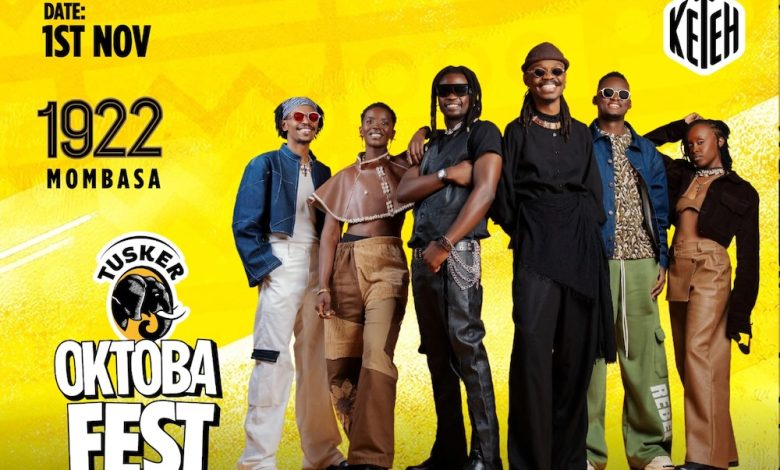
The Mombasa bill showed the other half of the strategy. Gengetone powerhouse Ssaru and Wakadinali, joined by Sir Bwoy, shared the stage with Keteh, a six-artist collective nurtured under Tusker’s Base to Billboardz programme, which used the night to debut its party track “Umebant.”
Oktobafest’s reinvention has been gradual. After the pandemic halted the inaugural edition’s momentum, KBL relaunched the festival in 2021 as a dispersed experience across more than 70 bars with over 150 Kenyan artists. Anne Michira, then EABL’s Head of Marketing Beers, framed it at the time as an effort to take “the celebrations to every corner of the country.” The racecourse returned in 2022, drawing some 20,000 revellers to cap Tusker’s centenary, and again in 2023 for a three-day festival with 100 acts, while the brand stretched the concept into Uganda, Tanzania and South Sudan.
The decisive break came in 2025, when KBL “deconstructed” the festival into a Nairobi Kulture edition at Carnivore Grounds, a nostalgic tribute to the 2000s music that shaped Kenyan urban culture, followed by regional editions in Eldoret, Mombasa, Kisumu and Nanyuki, backed by more than 200 on-trade activations. Mark Mugisha, then KBL’s Marketing Director, argued at the launch that the format “allows us to open up our value chain to a wider network of local service providers and talent.”
That is the heart of the cultural shift. Kenya’s big-ticket live entertainment has long been concentrated in Nairobi and priced for a narrow audience, with Oktobafest’s own season passes once running as high as KES 12,000 (about USD 93). By moving into neighbourhood lounges, beach clubs and sports bars in Ugunja, Nanyuki and Nakuru, and by dropping the gate fee, Tusker is betting that the future of the night out is local, frequent and accessible rather than a single expensive weekend in the capital.
Venue owners have welcomed the shift. During the 2023 regional leg in Naivasha, Party Island Lounge manager James Kamau said: “The Tusker Oktobafest has brought an incredible surge in business to our establishment.” In Mwea, a stop that drew more than 3,000 revellers left local traders reporting higher takings.
The festival has also become a talent pipeline rather than just a stage. Base to Billboardz, launched in February 2026 with musician Bien Baraza, whittled 30 shortlisted artists down to six through expert review and a public vote, then put them through a six-month accelerator of vocal, songwriting, stagecraft and music business training. Entry required at least one million career streams, positioning the programme as a career accelerator rather than a talent show. The collective’s album, Safari Ya Mapenzi, followed in August, and the artists have spent the Oktobafest season taking it to audiences around the country. It builds on earlier efforts such as the Nexters talent search, which rising artist Veryl Mkali Wao credited with “a turning point in my career.”
Not everyone has cheered the change. Some Nairobi fans still miss the scale and spectacle of the Ngong Racecourse years, and commentators have questioned whether the capital’s mega-festival will ever return. For KBL, though, the trade-off appears settled. Oktobafest, as Tusker’s marketing team put it at the very first edition, may borrow its name from a German festival, “but ours has Kenyanism at its roots.” In 2026, those roots stretch from Nyali to Ugunja.
